
Don't shut them out: why we sent all EU agriculture ministers a sandbox
This week, agriculture ministers across the European Union received an unusual delivery. It wasn't a briefing, nor a glossy report destined for the bottom of a pile. We sent them a sandbox, an actual one, filled by children with sand and with crayon drawings of the dinners, farms and food-science jobs they hope to grow up around. 27 boxes filled with sand going through the EU mailing system right now.
There's a reason for the literalism. The word sandbox is doing serious work in the EU biotech act right now, and almost nobody outside the policy bubble has noticed.
The dry part, and it's not the sand
Tucked inside the EU Biotech Act I is a tool called a regulatory sandbox. The idea behind it is almost childishly intuitive, and it could not be more important to the EUs competitiveness with biotech innovation around the world.
A sandbox is a contained space where you can build something, knock it down, try again and make a mess, all without the stakes of doing it for real. The regulatory version works the same way. It's a structured space, sitting well before any product reaches a shelf, where regulators and innovators sit at the same table and work through the genuinely hard questions together. What data do we actually need? How do you assess the safety of a food that didn't exist five years ago? What counts as good evidence for something this new?
This is how careful regulation can keep pace with genuinely novel things. You'd want a sandbox for any product category the existing rulebook never anticipated. It protects consumers and gives innovators a clear path. Everyone wins.
Which is what makes the next part so strange.
The lid is already half-closed
The Biotech Act I builds this sandbox, and then specifically locks novel foods out of it.
The stated reason is that novel foods "trigger ethical or cultural concerns among various consumer segments." Read that again. A scientific safety tool is being withheld on the grounds that some people might feel uneasy about the product.
EU food law has a clear logic, and this exclusion breaks it. Products are authorised on the basis of scientific safety assessment, full stop. Culture and sentiment belong to the marketing department, and at the end of the day, should be decided by a free and informed consumer. Withholding a regulatory tool on cultural grounds runs against the very framework the Novel Foods Regulation is built on.
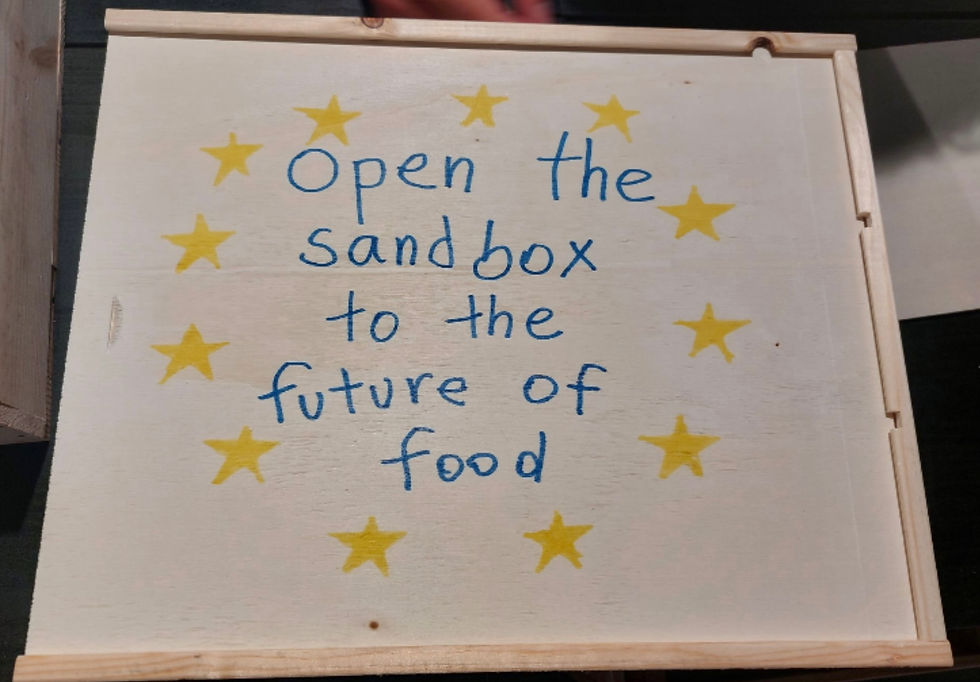
The contradiction gets sharper still. The same Act happily allows sandboxes for food enzymes, additives, flavourings and AI-driven testing methods, many of them produced in much the same way as the novel foods it shuts out. In March 2026, eight organisations including FoodDrinkEurope, EuropaBio and EIT Food called the exclusion exactly what it is: not justified on legal, scientific or innovation grounds.
So we have a sandbox built specifically for working out the rules of new food technologies, with one category of new food technology bring told not to play in that sandbox.
Europe is talking itself out of its own goals
Here's where it stops being an abstract drafting quirk.
The EU keeps saying it wants protein sovereignty: less dependence on a handful of non-EU suppliers for the protein and ingredients that feed the continent. That's a sensible goal in a new geopolitical landscape. Novel foods are one of the few credible ways to reach it, because many are produced through biotechnological processes that need little or no farmland. They let Europe grow more of its own food using industrial infrastructure rather than scarce land, land already stretched thin by climate adaptation, nature restoration and everything else competing for it.
You cannot demand protein sovereignty in one paragraph and make it structurally harder for new food and protein sources to reach the market in the next.
And while Brussels hesitates, others move. The UK opened a cultivated-meat sandbox in February 2025 which was lauded and deemed very successful. It has already published safety guidance, and is now attracting European startups (Dutch and French companies among them) who would rather apply there than wait here. We are, in effect, building the conditions for our own innovators to pack up and leave.
What we're actually asking for
The ask is modest, and it fits neatly into the legislative process already underway. We want ministers, the Commission and Parliament to:
Remove the novel-foods exclusion from the Biotech Act I sandbox framework.
Task EFSA with building a novel-foods sandbox protocol within twelve months of the Act taking effect, with clear eligibility criteria, proper monitoring, and a route through to full Novel Foods authorisation.
Recognise that delay has a cost too. Every year of regulatory hesitation carries an opportunity cost (for food security, for the environment, for European prosperity) that deserves to be weighed against the risks of acting.
None of this lowers the safety bar. A sandbox sits before market authorisation, it does not replace it. It makes the eventual safety assessment better, faster and more predictable for everyone involved.
Back to the children
We asked children to fill those sandboxes for a simple reason: they are the ones who will live in whatever food system we choose to allow.
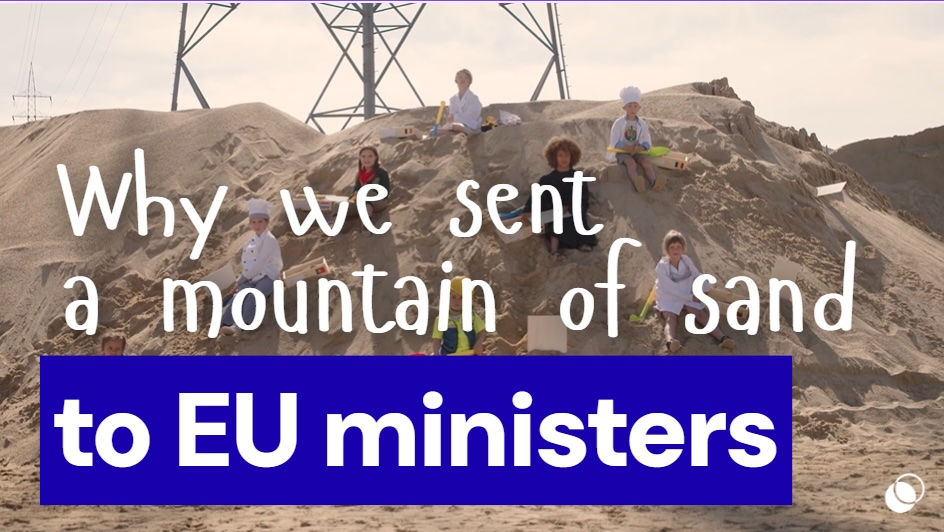
A sandbox is where you build the thing before it's real: carefully, collaboratively, with room to get it wrong and try again. That's exactly what good regulation of new food technology should look like. The children understood the assignment immediately.
The question is whether Europe's ministers will. The food system of 2050 is being shaped in a room right now. The least we can do is leave the lid open.