
Blue Tick, Red Flags: Filmmakers and Scientists Warn Against Krill Fishery Recertification

Updated: Apr 10
Wildlife filmmakers behind some of the world’s most iconic nature documentaries are urging the Marine Stewardship Council (MSC) not to recertify the Antarctic krill fishery operated by Aker QRILL.
In a statement released today, filmmakers who have worked on landmark productions with Sir David Attenborough warn that granting the industry the MSC’s well-known “blue tick” sustainability label risks misleading the public about the ecological reality unfolding in the Antarctic Ocean.
Their intervention coincides with the release of WePlanet’s new report quantifying the ecological scale of krill extraction in the Southern Ocean.

A Warning from Attenborough Filmmakers
Five wildlife filmmakers who have spent extensive time filming in Antarctica say they are deeply concerned about the impact of industrial krill fishing on the fragile ecosystem.
The signatories include BAFTA-winning wildlife filmmaker Bertie Gregory, co-director of Ocean with David Attenborough Toby Nowlan, Antarctica 3D director Fredi Devas, cinematographer of Frozen Planet John Aitchison, and cinematographer of Frozen Planet II and Our Oceans, Justin Lewis.
In their statement, the filmmakers say:
“We are wildlife filmmakers that have spent considerable time working in the region. We both know how important the Antarctic Ocean is for planetary health, and how fragile it is.”
They warn that enormous factory vessels are removing krill - the foundation of the Antarctic food web - at a scale that risks harming whales and other wildlife.
Granting the industry a sustainability certification, they argue, could give consumers a false sense that the fishery is environmentally benign.
Nowlan, who co-directed Ocean with David Attenborough, added that witnessing the scale of krill extraction firsthand was alarming:
“Whilst filming Ocean, the scale of the extraction of krill, on which almost the entire Antarctic ecosystem uniquely depends, was truly astonishing.”
New WePlanet Report: Krill Catch Could Have Sustained Millions of Animals
The filmmakers’ intervention comes as WePlanet releases a new report estimating the ecological opportunity cost of krill fishing.
Norwegian company Aker QRILL has been responsible for nearly two-thirds of the global krill catch over the past decade. Based on its typical share of the fishery, the krill removed by its industrial fleet in 2025 alone could have sustained:
550 blue whales, or
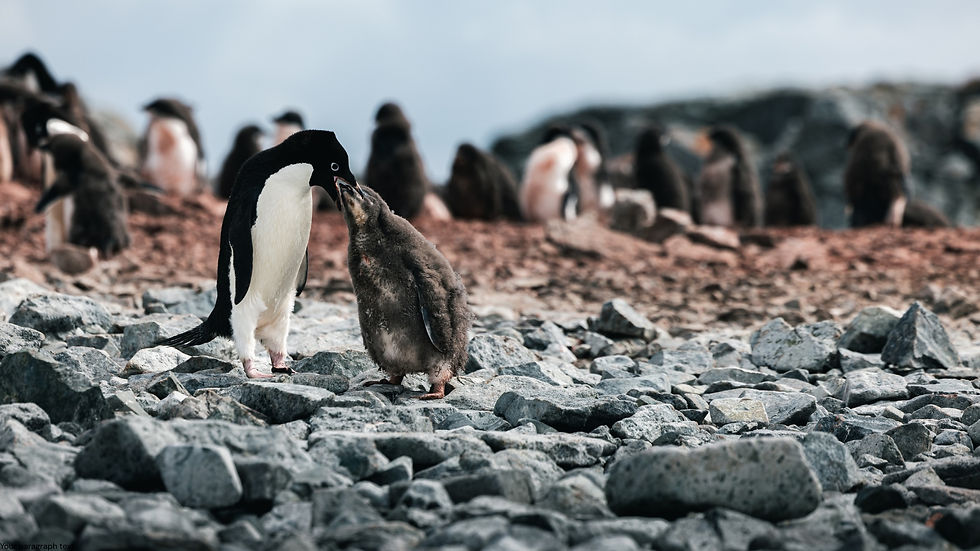
20 million Adélie penguin chicks, or
100,000 seals.
Mark Lynas, Head of Policy at WePlanet and lead author of the report, says these figures highlight the scale of the ecological trade-offs involved.
“With growing climate pressures on the Antarctic Ocean ecosystem, continued industrial krill extraction is just one more stress it can’t afford,” Lynas said.
The report also describes how more sustainable alternatives for all krill products are readily available on the market.
Yet the fishery may soon receive the world’s most recognisable seafood sustainability label.
An Ecosystem Under Growing Pressure
Antarctic krill are already under increasing strain from climate change.
Sea ice - which krill depend on during key stages of their life cycle - is shrinking rapidly. At the same time, ocean acidification threatens the tiny crustaceans’ ability to form shells.
Meanwhile, safeguards designed to distribute fishing across wider areas of the Southern Ocean lapsed in 2024 after political deadlock, raising concerns that fishing is becoming concentrated in key feeding areas for whales, penguins and seals.
In 2025, the fishery closed early for the first time after hitting the annual 620,000-tonne catch limit months ahead of schedule.
Dr Matthew Savoca, a Stanford University scientist who studies Antarctic whales and krill, warns that official figures may obscure the real ecological impact.
“Nearly all of the 620,000 tonnes of krill taken annually come from just a few very small areas,” he said. “While the industry says it harvests ‘only’ 1% of krill biomass, locally — at the scale that matters to predators — the share is far higher.”
Proposals from countries like Norway and China to increase the catch limit further, he added, could be “truly disastrous”.
Questions Over the Certification Process
The current recertification decision is based on an MSC commissioned assessment conducted by LRQA.
Critics say the process fails to account for escalating ecological risks - including climate change impacts and the loss of key management safeguards.
Marine conservationists also point out that the certification framework does not include food-web competition as a criterion, despite krill’s central role in supporting Antarctic wildlife.
Lynas argues that certifying the fishery under these conditions would send the wrong signal.
“Krill fishing is incompatible with long-term ecosystem health even under ideal management,” he said, “but, certifying it under the current conditions is especially indefensible.”
