
Approve NGTs, Don’t Regulate Them Out of Existence

After years of debate, Europe is finally close to approving New Genomic Techniques (NGTs). Yet the biggest threat to their adoption may no longer be an outright ban, but a growing web of bureaucracy. As policymakers enter the final vote, they must ensure that Europe does not approve these technologies on paper while regulating them out of existence in practice.
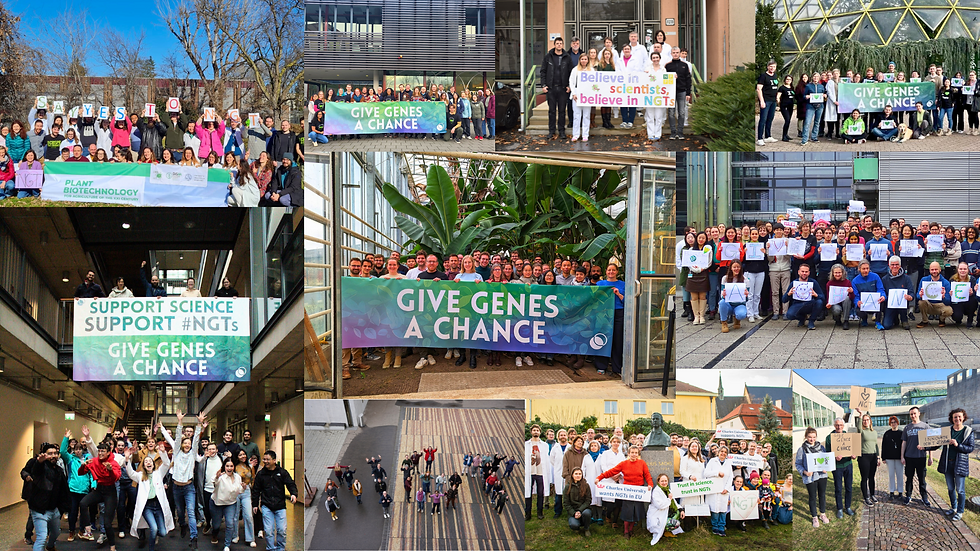
Europe is facing an increasingly difficult agricultural challenge: producing enough food while reducing environmental pressures, adapting to climate change, and strengthening the resilience of its food system, in a world that becomes more hostile by the day..
Innovation has always been a crucial part of that equation. From improved crop varieties to precision agriculture, technological progress has enabled farmers to produce more food with fewer resources. New Genomic Techniques (NGTs) are the next step in that tradition.
That is why the upcoming vote on New Genomic Techniques (NGTs) matters so much: It is a decision about whether Europe is willing to embrace innovation as a tool to strengthen food security, sustainability, and long-term competitiveness.
Growing more food with fewer pesticides
NGTs make it possible to breed crops faster and more precisely. Think of potatoes resistant to late blight, crops that require fewer fungicides, or varieties that can better withstand drought and heat. Many of these traits could eventually emerge through conventional breeding, but techniques such as CRISPR make the process faster, more targeted, and more affordable.
After years of political deadlock, scientific debate, and negotiations between the European Parliament, the Council, and the Commission, Europe is finally approaching the last stage of the NGT legislation process. A political compromise is now on the table.
Where this final phase is often largely procedural, in this case it is not. In recent weeks, new campaigns and amendments, mainly pushed by The Left and The Greens, have sought to tighten traceability requirements, expand labelling obligations, and introduce stricter rules for coexistence with organic agriculture. Although framed around transparency and consumer choice, these amendments form a deliberate strategy to increase administrative burden for breeders and farmers. Europe should be careful not to allow such bureaucratic requirements to become a mechanism for making these technologies unworkable in practice.
Take traceability requirements. Many NGT crops contain genetic changes that are indistinguishable from naturally occurring mutations or conventionally bred varieties. Mandatory tracking throughout the entire supply chain would therefore require extensive administrative systems for changes that are often biologically undetectable in the first place.
But there is a more fundamental question. Why should breeding methods be labelled at
all?
Consumers are generally not informed whether a crop was developed through conventional crossing, mutagenesis, cell fusion, marker-assisted selection, or any of the many other breeding techniques that have been used for decades. The reason for that is that the breeding process itself says little about the safety, nutritional value, sustainability, or quality of the final product.
Regulation should focus on the characteristics of the product, not the method used to develop it. Requiring special traceability and labelling for NGT crops risks creating administrative burdens that provide little meaningful information to consumers while increasing costs and legal uncertainty throughout the food chain.
The same concerns apply to coexistence requirements. Different farming systems should be able to operate alongside one another, and farmers who choose not to grow NGT crops should be free to make that choice. But coexistence measures must remain proportionate and grounded in scientific evidence.
If buffer zones, certification requirements, liability rules, or administrative obligations become excessive, they effectively transfer the costs of accommodating one production preference entirely onto another. In practice, this could discourage farmers and breeders from adopting NGTs even where there is no scientifically established risk that would justify such restrictions.
The battle over genetic technologies
It would be a mistake to view the current amendments as merely technical adjustments. Many of the organisations and political groups now pushing for additional traceability requirements, expanded labelling obligations, and stricter coexistence rules have spent years opposing the use of genetic technologies in agriculture.
Now that an outright rejection of NGTs appears politically out of reach, the battleground has shifted. The debate is no longer primarily about whether these technologies should be allowed, but about the conditions under which they can be used.
This is a familiar regulatory strategy. If a technology cannot be banned, it can still be slowed down, discouraged, or effectively blocked through layers of administrative requirements, legal uncertainty, and compliance costs.
Some of the proposed amendments offer a revealing illustration of how this works in practice. One amendment calls for special scrutiny of NGT plants with the “potential to persist, reproduce or spread in the environment, within or beyond fields”. At first glance, this may sound like a reasonable precaution. On closer inspection, however, it raises an obvious question: what agricultural crop does not have the potential to persist, reproduce, or spread?
After all, this is precisely what plants do. Wheat, oilseed rape, sunflowers, sugar beet, potatoes, conventionally bred varieties and organic varieties alike all have the capacity to survive, reproduce, or appear beyond the field in which they were originally planted.
This illustrates a broader problem in the current debate. The language of some amendments appears highly specific and precautionary, but the criteria themselves are often so broad that they could justify additional scrutiny for characteristics that are entirely normal in agriculture. The result is a steady expansion of regulatory requirements without a clear connection to demonstrable risk.
Increasing paperwork burden as a strategy
There are two ways to stop a technology. It can be prohibited by law, or it can also be buried under paperwork. We’ve seen this before. Opponents of nuclear energy admit proudly that they made nuclear energy virtually impossible to build due to regulatory burdens. And the cumulative effect of the proposed amendments being considered risks creating exactly such a situation. Europe may formally approve NGTs while simultaneously making them so difficult and costly to develop, cultivate, and market that many breeders and farmers simply decide not to use them. That would amount to regulating NGTs out of existence.
Suffocating a new technology by making regulation so complex and expensive, increases the risk that only the largest multinational corporations can still participate. That outcome would be deeply ironic. One of the great promises of CRISPR is precisely that it lowers the barriers to innovation, making advanced breeding tools accessible not only to major corporations but also to smaller breeders, public research institutes, start-ups, and regional innovators.
While countries such as the United Kingdom, Japan, Argentina, and the United States are modernising their regulatory frameworks, Europe risks falling behind once again in a technology that could play an important role in sustainable agriculture, food security, and strategic autonomy.
We therefore call on Members of the European Parliament to support the adoption of the Regulation on plants produced by certain New Genomic Techniques (NGTs), in line with the compromise text agreed during the trilogue negotiations in December 2025, without further amendments that risk turning a historic opportunity for European agriculture into another lesson in regulatory overreach.